As experienced commercial cleaning professionals, we recognize the importance of having a plan for maintaining cleanliness in public spaces like offices, hotels, or conference centers. Ink stains on carpets are a common issue that requires prompt and effective treatment to prevent permanent damage, protect both the customer’s property and your cleaning company’s reputation.
This guide provides detailed instructions on how to handle both fresh and old ink stains using professional-grade equipment and chemicals so just follow the steps.
Step 1: Secure the Area
Start by securing the area around where you want to remove an ink stain. Use safety signs and barriers to prevent foot traffic, helping to avoid further smudging of the ink and accidental tracking on shoes during the cleaning process. Depending on circumstances, you may wish to vacuum the area as well to prevent extra materials like dust and dirt becoming involved in your cleaning process.
Step 2: Determine If the Ink Stain is New or Old
New (Wet) and Old (Dried/Set) ink stains are handled differently so it’s important to know which is which. Listed below are overviews on how to deal with each. For more detailed information and multiple ways to tell how old an ink spill is, read this.
Handling New, Wet Ink Stains
Quick action is vital for fresh ink stains:
- Immediate Containment: Secure the rug or carpet area quickly with safety barriers and signs.
- Gently Blot the Stain: Use a clean, dry white cloth or an absorbent towel to blot the area and soak up as much ink as possible.
- Apply Solvent: A solvent like isopropyl or rubbing alcohol dabbed on the stain can be effective to dissolve the ink.
- Extraction: After the solvent application, extract the dissolved ink and solvent.
- Rinse and Dry: Rinse thoroughly and dry the area fast to make it ready for use.
Dealing with Old, Dried Ink Stains
If you have an old or seemingly permanent ink stain you will need a more aggressive approach:
- Pre-Treatment: Use a potent ink removal chemical like a commercial-grade enzymatic cleaner.
- Agitation: Gently agitate the area with a carpet brush or rotary machine.
- Extended Dwell Time: Allow the cleaner to work on the stain for 10-15 minutes.
- Thorough Extraction: Multiple passes with an extractor may be necessary.
- Post-Treatment: Inspect and possibly repeat this process if the stain persists.
- Final Rinse and Dry: Ensure a thorough rinse and complete drying to avoid residue.
Step 3: Identify the Type of Ink
Identifying different types of ink, whether the ink is water-based, gel, or permanent is crucial as it influences the choice of cleaning solutions and methods. Most public spaces typically face water-based inks, which are easier to remove. For detailed steps on identifying ink types for stain removal, you can refer to a dedicated article here.
Step 4: Select the Right Chemical Remover
Choose from a variety of robust, professional carpet cleaning products:
- Enzymatic Cleaners: Effective for breaking down ink at a molecular level, especially organic or protein-based inks.
- Solvent Cleaners: Products like ‘Prochem Ink Away’ or ‘Chemspec Ink Exit’ tackle tougher, solvent-based inks.
- Oxygen-Based Bleaches: Safe for most carpets, these are effective for more stubborn stains without the harsh effects of chlorine bleach.
- Hydrogen Peroxide: An effective ink stain remover, as it can break down and remove water-insoluble ink pigments found in ballpoint pen, fountain pen, and printer inks but BE CAREFUL, Hydrogen Peroxide can sometimes remove dye from your carpet too (actually make them invisible).
***Always test the product or chemical you wish to use in an inconspicuous area of the carpet first following the manufacturer’s guidelines.***
Step 5: Pre-Treat the Carpet Stain
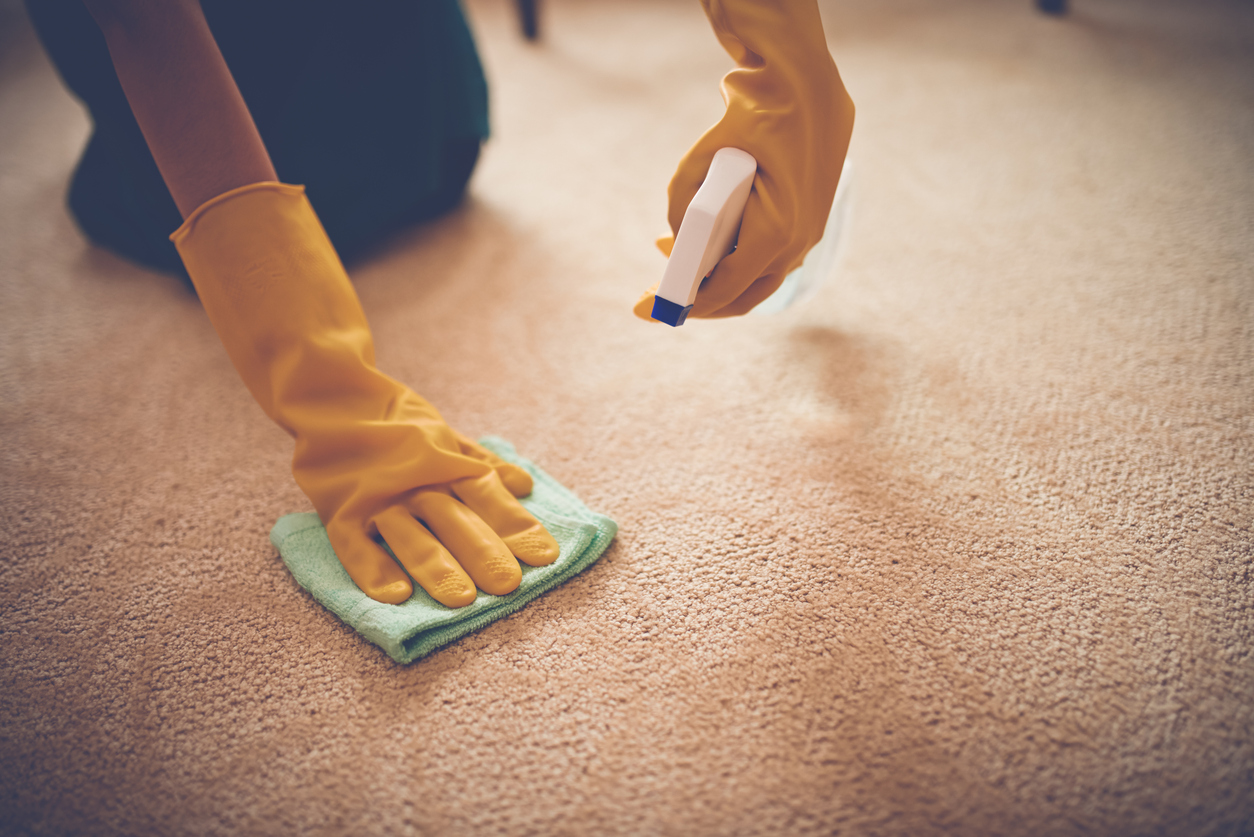
AFTER TESTING, apply the chosen solution to the stain using a sprayer to the area first, targeting the stain without saturating the carpet. Allow the chemical to sit as recommended so it will get deeper into the carpet and do more to break down the ink for easier extraction.
Step 6: Agitation
Use a soft brush or a bonnet on a low-speed rotary machine to gently agitate the stain so as not to damage carpet fibers. This helps the chemical penetrate deeper and loosens the ink particles from the carpet fibers.
Step 7: Extraction
Remove the loosened ink and chemical residue using a portable extractor (LINK?) or a truck mount system. These powerful machines ensure deep cleaning and significantly reduce drying time.
Step 8: Rinse and Neutralize
It’s crucial to rinse the area with clean water to remove any remaining cleaning solution. If necessary, apply a neutralizing agent to balance the pH level of the carpet, helping prevent resoiling and extending carpet life.
Step 9: Drying
Speed up the drying process using air movers or fans. Keep the area cordoned off until the carpet is completely dry to avoid any slips or post-cleaning stains.
Step 10: Post-Cleaning Inspection
Once the carpet is dry, closely inspect it to ensure the stain has been fully removed and that there’s no discoloration or damage. Document the results and any products used for client records and future reference as this can be a powerful way for your company to gain value in the eyes of your customers!
Wrapping Up
Ink stains happen and handling ink stains is always a case-by-case situation. At Chemsource Equipment we have decades of practical, on the job experience and if you find yourself in a bind with an ink stain just give our experts a call at (336-515-9990) or send us a message and we’ll give you our best advice!
Table of contents