Table of contents
There are right ways and wrong ways to use floor burnishers to maintain the cleanliness and appearance of various commercial and industrial spaces. To achieve optimal results and ensure the longevity of your floor burnisher, it’s essential to follow a set of best practices.
In this guide, we will take you through each step, from prepping the area for burnishing floors to troubleshooting common issues, ensuring that your floors shine brilliantly. First, let’s talk about some important machine differences.
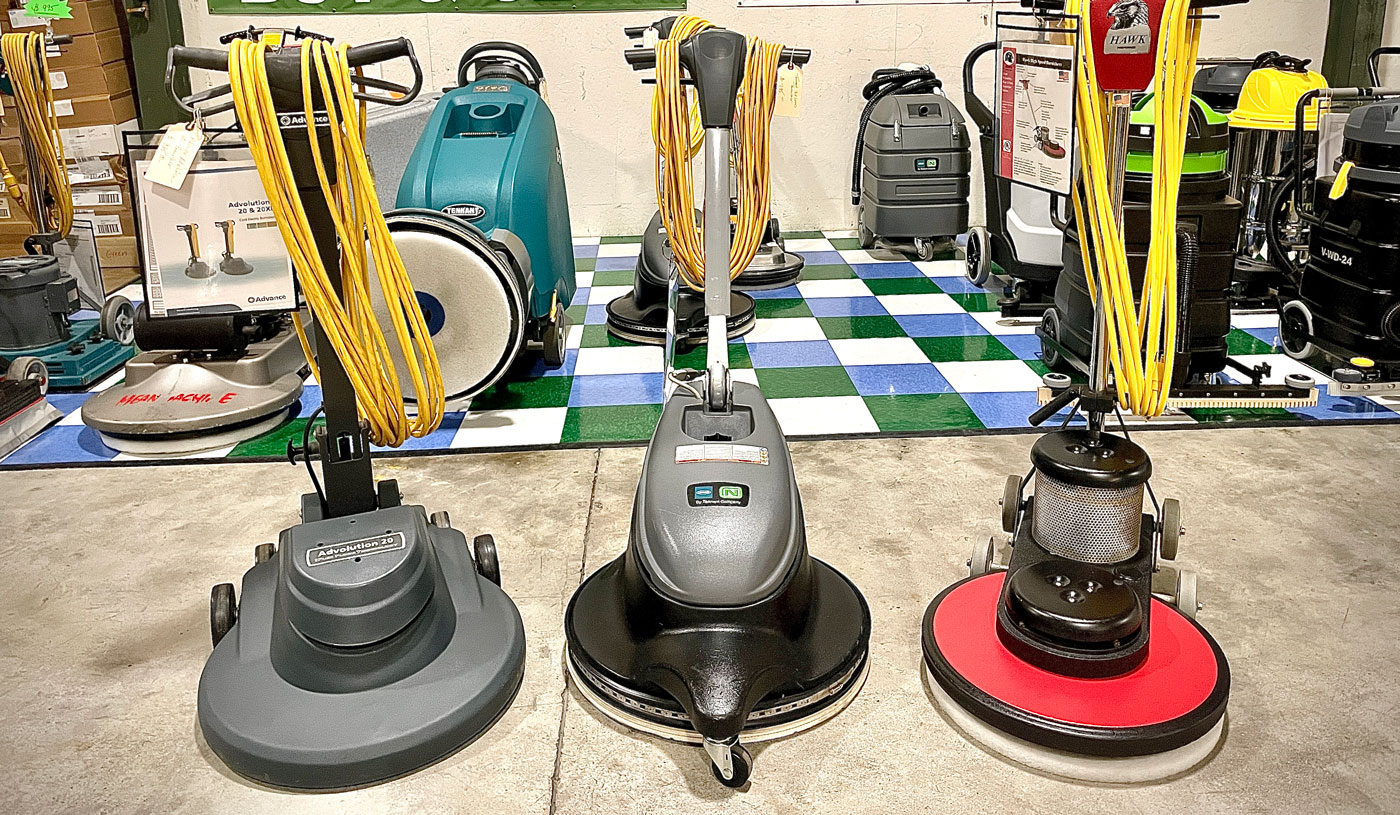
High Speed Floor Burnisher: Typically these burnishers operate at speeds ranging from 1000 to 3000 revolutions per minute (RPM). The high-speed rotation is powered by a more powerful motor. This high speed is essential for polishing and creating a high-gloss finish on floors.
Low Speed Floor Buffer: Often confused with high-speed burnishers a buffing machine normally operates at a slower speed, usually below 400 RPM and has a less powerful motor making them more suitable for scrubbing, stripping, and cleaning floors rather than polishing. Floor burnishing can sometimes be a multi-stage process best using multiple types of machines to achieve a better end result. One can even use a floor burnisher in the cleaning and prep of a floor to be finished with a high speed burnisher.
Next we’ll outline some easy steps to follow to achieve the highest level results on your floors, take the best care of your equipment and make your customers happy.
Prepping the Burnishing Area
To achieve the best results and ensure the longevity of your floor finish, it’s essential to properly do a floor cleaning of the area before you buff the floor. Burnishers will only work well on a well-prepped floor. Below, we’ll provide detailed steps on how to prep the area effectively for a successful burnishing process.
Communicate With the Users of the Space
Often overlooked but communication is key, even when using buffers and burnishers in commercial cleaning! If you’re working with a client space, be sure to let the business owner, site manager or employees know that you’ll be cleaning and polishing the area with a floor buffer for an estimated amount of time. Let them know that the buffer might be noisy and thus, the area will be off-limits for a while. When burnishing floors, you may want to cordon off the area and use wet floor and caution signs. There may even be insurance-related reasons where advance communication about using buffers and burnishers makes sense. A little bit of communication goes a long way towards happy customers.
Clearing the Area
Before you begin prepping to burnish a floor, clear the area of any obstacles, furniture, or debris that might hinder your access. Moving objects as you go is an inefficient way to operate and getting everything out of the way beforehand will allow for a smooth and uninterrupted burnishing process.
Inspect the Floor
Carefully inspect the floor for any visible damage, cracks, or defects. Address any repairs needed, because just like buffing, burnishing can accentuate floor imperfections. Now is the time to repair cracks and damaged sections if that is part of your service offering, to ensure a uniform finish when you finally burnish the floor.
Dust Removal
Sweeping or vacuuming the area is essential to remove loose dust, dirt, and debris. Dust particles can scratch and scuff the floor during the burnishing process, so thorough removal is crucial. Pay special attention to corners and edges. Whether you use a dust mop or a wet mop for dust control depends upon the type of material that needs to be removed.
Address Spills and Stains
If you encounter any spills or stains, take the time to clean them properly. Use appropriate cleaning agents and tools to ensure complete removal. Stains left unaddressed can become more pronounced after burnishing. In addition, sticky or gummy spills can damage pads and make your burnisher move in unplanned ways when you run over them.
Wet Cleaning
For heavily soiled areas, consider a wet cleaning process. Use a suitable floor cleaner and a mop or auto-scrubber to thoroughly clean the floor surface. Ensure that the floor is completely dry before proceeding with burnishing to prevent any slip hazards and maintain the effectiveness of the burnishing pads.
Remove Floor Finish Buildup
If there’s a buildup of old floor finish or wax on the surface, it’s essential to remove it before burnishing. Stripping the old finish with a floor stripper and a scrubbing machine will provide a clean canvas for the burnishing process.
Edge Cleaning
Pay close attention to edges and corners of the floor during prep. Use edge cleaning tools or a crevice attachment on your vacuum to ensure these areas are clean and free of debris.
Protect Nearby Surfaces
This one is important for avoiding angry customers! If there are nearby surfaces or objects that you want to protect from splashes or stray burnishing chemicals, use appropriate barriers such as plastic sheeting or painter’s tape.
Ventilation
Ensure proper ventilation in the area, especially if you’re using any chemicals during the prep process. Good airflow will help dissipate fumes and promote a healthier work environment. This is also an important consideration if you’re using a propane floor burnisher.
Getting the Floor Burnisher Ready
Power Source
Check that the burnisher is properly connected to a reliable power source. Ensure that the power cord is in good condition and free from any fraying or damage. Use a dedicated outlet with the appropriate voltage and amperage to avoid overloading circuits.
Select the Right Burnishing Pad
Choose a pad that is suitable for the type of floor you will be cleaning. Different pads are designed for various floor surfaces, so ensure you have the correct one to achieve the desired results. Softer pads are suitable for polishing, while more abrasive pads are used for heavy-duty cleaning as they have more friction with the floor surface. The floor pad must be centered when you attach the pad because burnishers operate at high speeds and this can accentuate issues with an off-center pad. If the pad is not centered you’ll know it right away!
Proper Pressure
Setting the correct pressure on the burnisher is essential for achieving the desired cleaning results. Adjust the pressure settings on the burnisher to match the condition of the floor. For deep cleaning or stain removal, higher pressure may be necessary, while lower pressure is suitable for routine maintenance.
Install the Burnishing Pad
Attach the selected pad to the burnisher’s pad driver securely. Ensure it is centered on the machine and tightened properly to prevent wobbling during operation.
Check the Dust Bag
If your burnisher is equipped with a dust collection bag, make sure it is empty and properly attached. A clean dust bag will help prevent dust and debris from being thrown into the air during the cleaning process.
Adjust Handle Height
Adjust the handle of the burnisher to a comfortable height for the operator. A proper handle height will ensure better control and reduce strain during operation.
Begin Cleaning
With the job space properly prepped and the floor burnisher properly set up, you are now ready to begin cleaning. Start the machine, and while standing behind the burnisher, gently guide it across the floor in a smooth, overlapping pattern. Maintain a consistent pace and avoid sudden stops or sharp turns when burnishing your floors.
Pay close attention to the progress of the cleaning process. Ensure that the floor is achieving the desired level of shine and cleanliness. Adjust the burnisher settings or pad if necessary to achieve the best results.
Best Patterns of Movement for a High Speed Floor Burnisher
Achieving a uniform shine and efficient cleaning requires following the right patterns of movement with your machine:
- Figure-Eight Pattern: One of the most effective patterns is the figure-eight. Start by moving the machine forward in a straight line, then gently turn it in a curved loop to create the upper half of the figure-eight. Continue with another straight line in the opposite direction, followed by the lower half of the figure-eight. This forward and backward pattern ensures even coverage and minimizes streaking.
- Overlapping Strokes: Always overlap each pass of the burnisher slightly with the previous one. This ensures that no areas are missed and helps maintain a consistent shine across the entire floor.
- Slow and Steady: Maintain a consistent and controlled pace when operating the burnisher. Avoid sudden stops or sharp turns, which can leave marks on the floor. Slow and steady movement allows the burnisher to work effectively.
When You’re Done: Consistent Machine Maintenance
When you’re done with the floor care these steps will help with protecting your investment. Regularly maintain your high-speed floor burnisher to ensure optimal performance. This includes:
- Cleaning the burnishing pads after each use to remove built-up residue and debris.
- Inspecting the machine for any loose or damaged parts and addressing them promptly.
- Lubricating moving parts as recommended by the manufacturer to prevent wear and tear.
This wraps up our list of considerations for using burnishers in the most efficient manner. If you want advice on the best floor pad or solutions to use for a specific job, no problem, we’re here to help! You can call and talk to one of our commercial cleaning experts with decades of experience any time at 336-515-9990 or, before you go out on a job just contact us on our website.