Picking the right floor pad for your cleaning machines makes a big difference in how your floors look and how easy your cleaning job will be. This guide is all about helping you find the perfect pad for the job, making sure your floors look awesome and your work feels like a breeze. Whether you’re buffing, polishing, or scrubbing, we’ve got you covered with information that you’ll need.
Table of Contents
Understanding the Differences Between Burnisher and Buffer Floor Pads
Stripping pads are like the tough guys in the cleaning world, taking off old finishes and stubborn gunk. Scrubbing pads come next, a bit gentler, to tackle dirt and grime without hurting the floor. Cleaning pads are your everyday heroes for regular clean-ups, keeping floors in tip-top shape. Polishing pads step in for that extra shine, smoothing out small scratches. Lastly, burnishing pads are the finishers, buffing floors to a high gloss. Each has its role, ensuring your floors look their best.

Stripping Pads – These are usually dark in color. They strip away old wax and finish, getting floors ready for a fresh start.

Scrubbing Pads – These pads are usually green and for scrubbing away built-up dirt and marks. They’re less abrasive, so they won’t damage your floors.

Cleaning Pads – Usually red, these are your go-to for daily or regular cleaning. They pick up dirt and give the floor a nice, clean look without being too harsh.

Polishing Pads – Soft and usually light-colored, these pads are for smoothing out tiny scratches and preparing the floor for a shiny finish.
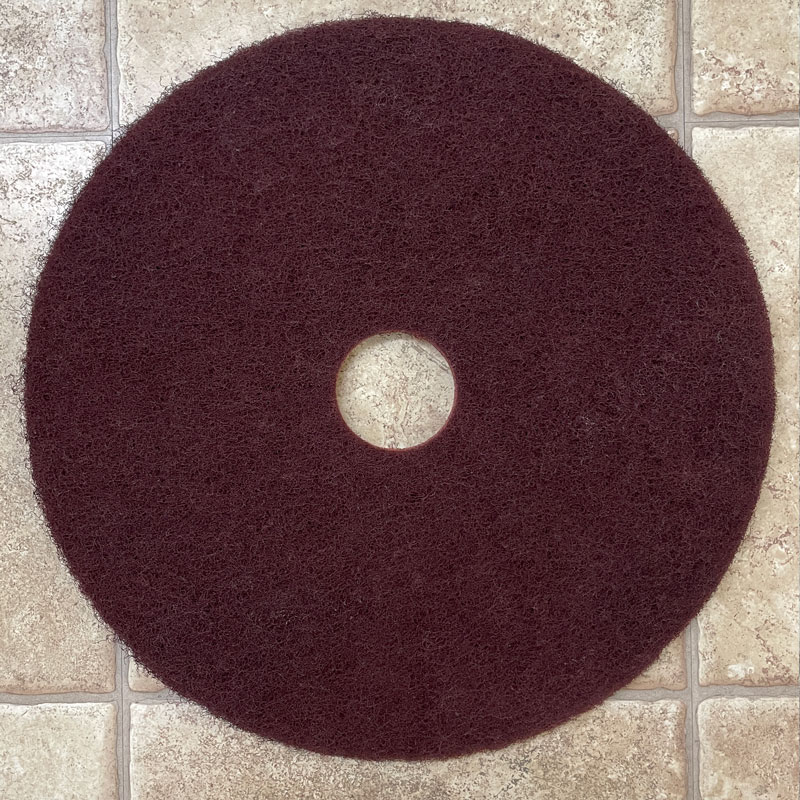
Prep Pads – Burgundy or dark red pads are typically used for spray buffing, light cleaning, and polishing of floors. They provide a gentle action suitable for maintaining polished finishes without causing damage.
Floor Pad Color Coding System For the Right Floor Pad
The color-coding system in floor pads is like a cheat sheet for picking the right pad. Darker colors, like black or brown, are usually the most abrasive for tough jobs like stripping old finish off. As the colors get lighter, like green or blue, the pads get less abrasive, great for scrubbing or general cleaning. The lightest colors, like white or tan, are super soft for polishing and giving floors that glossy look. It’s a quick way to make sure you’re using the right pad for the job!
Here’s how the color-coding breaks down, generally speaking:
Black/Brown: These are your heavy hitters, perfect for stripping off old finishes and tough dirt.
Green/Blue: A bit softer, great for scrubbing away grime without going too hardcore.
Red: The middle ground, ideal for daily cleaning tasks.
White/Tan: Gentle and soft, these are for polishing and shining up your floors to look their best.
Pad Materials for Different Flooring Types
When it comes to floor pads, the material they’re made from really makes a difference in how they perform on different types of flooring:
Natural Fibers: These are eco-friendly and great for polishing, especially on natural stone floors.
Synthetic Fibers: Durable and versatile, synthetic pads can handle a range of tasks from stripping to polishing on various floor types.
Combination Fibers: A mix of natural and synthetic, these pads offer a balance, suitable for general cleaning and light scrubbing.
Each material has its strengths, so it’s all about matching the pad to your floor and the job at hand! In addition, when selecting pads for different floor types, consider:
Vinyl: Use softer pads for polishing and burnishing to avoid scratches.
Wood: Choose very soft pads for buffing and polishing; avoid harsh scrubbing pads that can damage the surface.
Marble: Use soft, non-abrasive pads for polishing to maintain shine without etching the surface.
Concrete: Tougher pads are suitable for stripping and cleaning, but ensure the pad isn’t so abrasive that it damages the concrete.
Matching the pad to the floor material ensures effective cleaning without damage.
Machine Speed in Pad Selection
When choosing floor pads, the speed of your machine matters a lot:
Low-Speed Buffers (175-600 RPM): These need pads that can handle heavy-duty cleaning like stripping or scrubbing without falling apart. They’re tougher and can take the slow, hard grind.
High-Speed Burnishers (1000-3000+ RPM): These work with softer pads designed for polishing and burnishing. These pads can withstand the rapid movement to create that glossy shine without causing damage to the floor or the pad.
Matching the pad to your machine’s speed ensures you get the best clean without damaging the floors or the pads.
Maintenance and Care of Floor Pads
To keep your floor pads in tip-top shape and save money, consider these tips:
Clean After Use: Rinse pads with water to remove debris and prevent buildup.
Proper Drying: Hang or lay flat to air dry; avoid stacking wet pads.
Rotate Pads: Switch sides to wear evenly and extend life.
Storage: Keep in a dry, cool place away from direct sunlight to prevent damage.
Caring for your pads this way can save you time and money!
Choosing the right floor pad for your cleaning machines is key to making your floors look amazing and making your cleaning tasks easier. From stripping to polishing, understanding the types of pads, color-coding, materials, and compatibility with different floor types, along with considering machine speed and maintaining your pads, is essential. With this guide, you’re all set to pick the perfect pad and keep your floors and pads in great shape!
If you have any questions or need to know the best pads to use for a specific job don’t hesitate to give our experts at ChemSource Equipment a call at 336-515-9990 or email us through our contact form here. We’ll get you answers right away!